





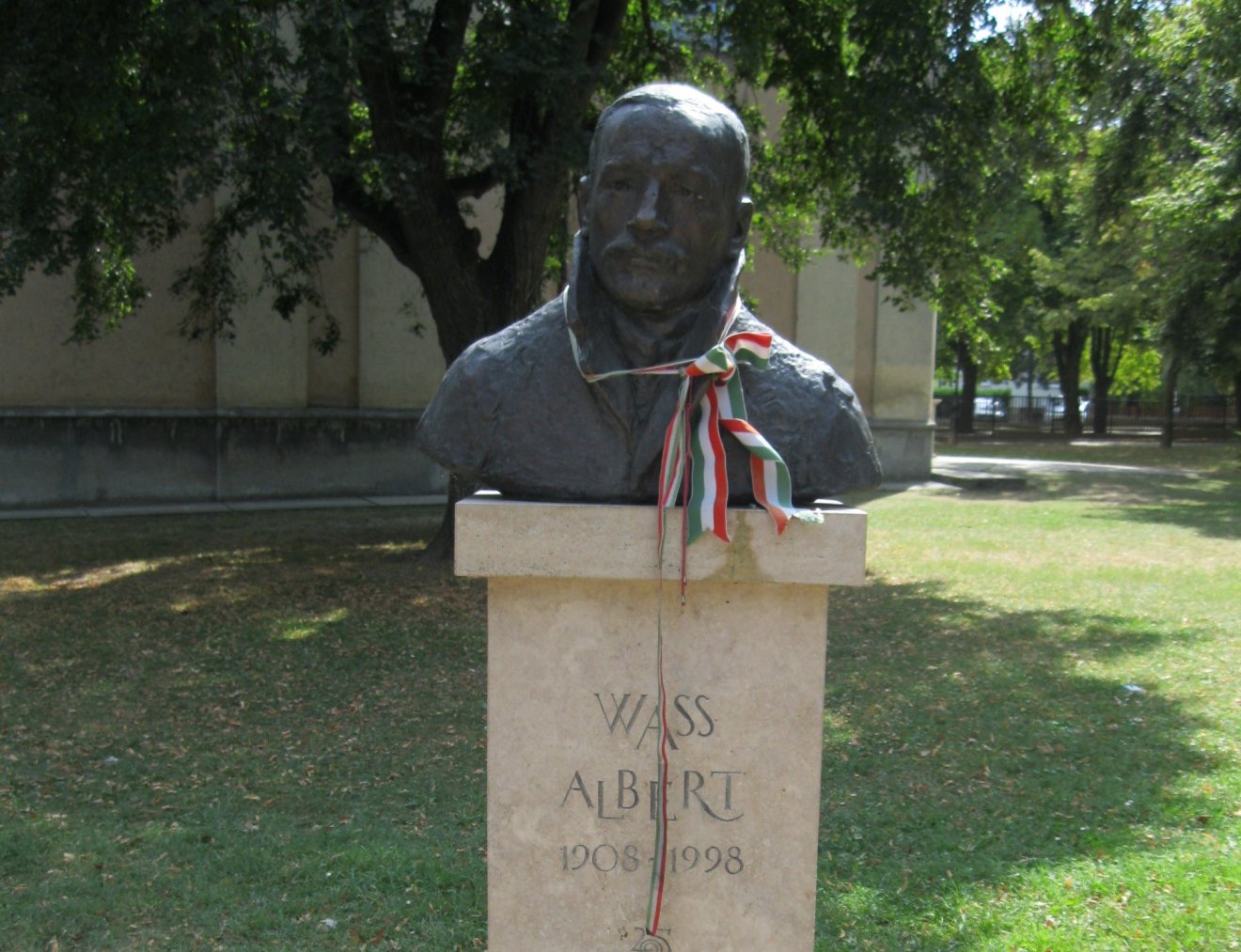
The “Wandering Szekler” statue in Odorheiu Secuiesc exists in Hungary as a depiction of Albert Wass
Fotó: Wikimedia Commons
The “Wandering Szekler” (Vándor székely) statue in Odorheiu Secuiesc (Székelyudvarhely) verifiably depicts writer Albert Wass, according to Arad attorney Bogdan Ionescu, who filed a lawsuit on behalf of the association he leads seeking the monument’s removal – and won at first instance. The plaintiff told Krónika that he had identified three “lookalike” statues in Hungary bearing Albert Wass’s name, on which basis he sought the dismantling of the bust. According to István Szakács-Paál, Mayor of Odorheiu Secuiesc, the municipality will request an independent expert assessment, explaining to Krónika that removing Hungarian cultural heritage at the “first beck and call” would amount to self-surrender; therefore, they will fight for their position.
2026. szeptember 27., 19:252026. szeptember 27., 19:25
(Our original Hungarian-language article can be read here.)
We reported that the Arad County Court ruled in favor at first instance of the claim brought by the Arad-based Association for the Prevention of Antisemitism and the Combating of the Legionary Movement. In its petition, the organization demanded the removal of the “Wandering Szekler” statue situated in the Memorial Park of Odorheiu Secuiesc, arguing that the bust in fact depicts Albert Wass. The works of the late writer, who descended from a Transylvanian noble family, only became accessible to the general public following the 1989 fall of communism, with his novels and poetry serving as a cornerstone for the strengthening of Hungarian national identity.
The Arad-based non-governmental organization sought the removal of the Székelyudvarhely monument by invoking Law No. 241/2025 – commonly referred to as the “Vexler Law” (named after the initiator of the legislative proposal, Silviu Vexler, Member of Parliament representing the Federation of Jewish Communities in Romania) – which tightens criminal sanctions for fascist, legionary, racist, xenophobic, and antisemitic organizations and symbols, as well as for the promotion of hate speech and the cult of war criminals.
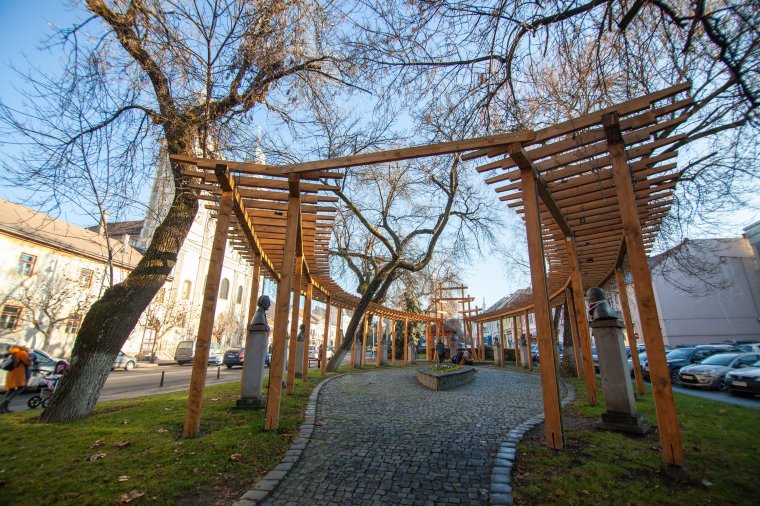
A székelyudvarhelyi Emlékezés Parkjában található „Vándor székely”-szobor eltávolítását rendelte el alapfokú ítéletében az Arad megyei törvényszék, mert a felperes állítása szerint ez a Romániában háborús bűnösnek nyilvánított Wass Albert írót ábrázolja.
Born in Răscruci (Válaszút), Albert Wass lived in Germany from 1944, and subsequently in the United States from 1952 until his death. On March 13, 1946, the Cluj People’s Tribunal sentenced him to death in absentia – alongside his father – for “war crimes and murder,” alleging incitement to the murder of several individuals following the Hungarian army’s entry into Northern Transylvania in 1940. Subsequent legal attempts to secure his exoneration proved unsuccessful; most recently, the High Court of Cassation and Justice in Bucharest rejected a petition for retrial in the spring of 2008. Consequently, in Romania he remains formally designated as a war criminal, and as such, no public memorial may be erected in his honor.
While the local government of Székelyudvarhely has not yet received the written grounds of the ruling, Mayor István Szakács-Paál confirmed to Krónika on Tuesday that they will appeal the decision.

During the first-instance proceedings, we anticipated that the court would appoint an art expert to examine the statue, yet the court did not deem this necessary. We are awaiting the formal service of the judgment to understand why the Arad court arrived at this conclusion at first instance” – stated the UDMR/RMDSZ (Democratic Alliance of Hungarians in Romania) mayor of the Szekler mother town, questioning both the standing of the Arad NGO and the jurisdiction of the court.
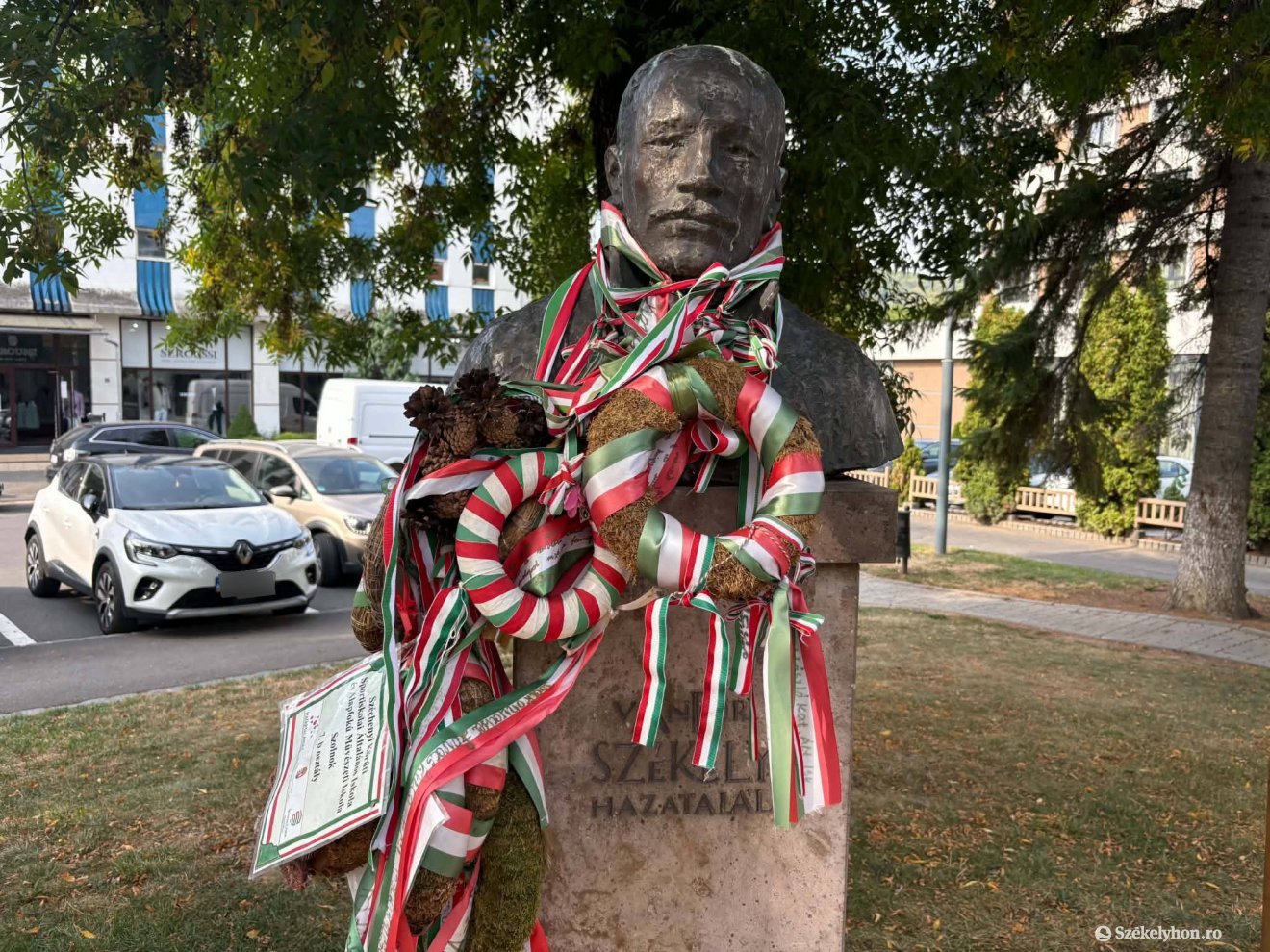

The Odorhei statue, bearing the inscription “The Wandering Szekler Finds His Way Home,” was unveiled in 2004, whereas the Albert Wass statue in Solymár, likewise sculpted by János Blaskó Jr., was unveiled in 2005
Fotó: Székelyhon
The municipal leader told our newsroom that he discussed the matter personally on Tuesday with Jenő Szász, who was Mayor of Odorhei when the statue was erected in 2004, and who confirmed that they had not inaugurated a “disguised” statue of Albert Wass, nor had it ever been their intention to dedicate a memorial to the author. Furthermore, the mayor
“Local vernacular in Odorhei does not refer to it as an Albert Wass statue either; no one considers it to be one,” added István Szakács-Paál, noting that multiple letters had been exchanged with the head of the civic organization, attorney Bogdan Ionescu, who nonetheless remained intransigent. “Invoking current legislation, he insists on its removal, just as he does with the statue of József Nyírő located in the statue park. In that case as well, we disagree with his stance, but he is adamant. We simply cannot reach an understanding with him,” the mayor told Krónika.
István Szakács-Paál also considered it crucial to highlight that Albert Wass was condemned to death in absentia by the Cluj People’s Tribunal in 1946. “It is not my place to comment on judicial rulings, but it is important to remember that when the statue was unveiled in 2004, officials were fully cognizant that an Albert Wass monument could not be erected in a public space, and accordingly, no such attempt was made. Now, the plaintiff accuses the municipal administration of that time – or rather, of any time –
asserting that ‘Wandering Szekler’ is merely a cover name for this statue. However, this assertion contradicts the artistic intent,” the mayor stated. He also addressed why the municipality declined to comply with the organization’s initial notice:
Therefore, we firmly intend to see this legal battle through to the end, and we demand that an independent expert determine whom the statue actually depicts.”
According to Mayor István Szakács-Paál, the Odorhei statue is the original, and the Hungarian copies were cast from it
Fotó: Olti Angyalka
The city leader perceives no anti-Hungarian animus behind the actions of attorney Bogdan Ionescu and the NGO he directs, given that he has petitioned for the removal of statues of several Romanian historical figures and the renaming of public institutions dedicated to them as well. “He calls for the removal of statues regardless of nationality, targeting a great many figures. If I recall correctly, the law also implicates Octavian Goga in this regard, and Goga likewise has statues, with numerous schools and public institutions bearing his name. Hence, I see no ethnic prejudice behind it; he is not doing this because we are Hungarians,” the mayor noted.
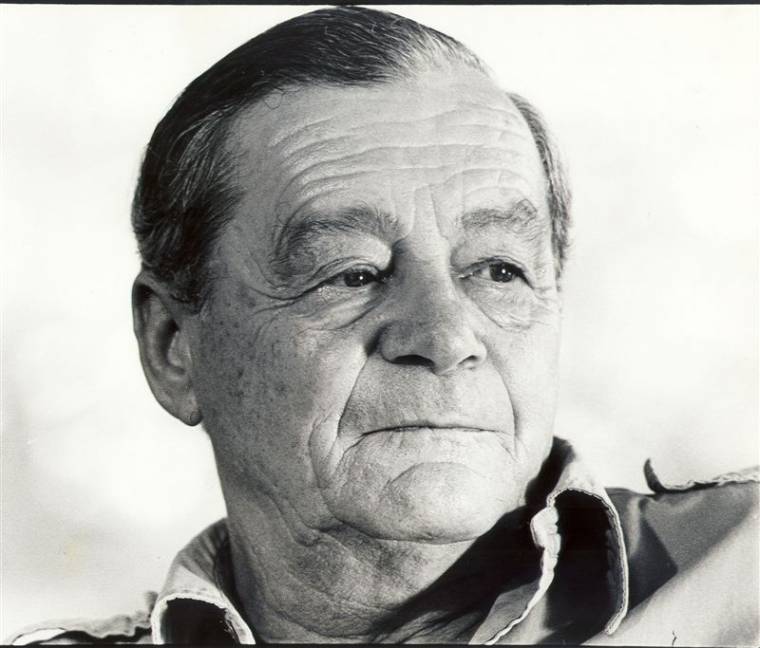
A 2023-as esztendő a magyar olvasók körében Wass Albert születésének száztizenötödik és halálának huszonötödik évfordulója. De ki is Wass Albert? Egy rendkívül összetett személyiség.
Szakács-Paál added that they also anticipate legal action regarding the bust of József Nyírő. That work is likewise located in the Odorhei statue park, while a local street bears the author’s name and a memorial house dedicated to him stands along that same thoroughfare.
“Pursuant to the law, he requested that we eliminate everything associated with Nyírő, to which we replied that should the law truly mandate this, we would comply. Subsequently, he sent another letter inquiring whether it had been carried out, to which we responded that we still see no statutory obligation requiring it. Nyírő was never the leader of any such faction, nor was he convicted by any court for activities of that nature; consequently, we maintained that an expert should be appointed in his case as well to establish whether no institution may bear József Nyírő’s name. After all, it is one thing that Odorhei has a street named after him, along with a memorial house and a statue, but in other settlements across Szeklerland, schools bear József Nyírő’s name. We wrote back stating that we do not regard this rampage as reasonable, whereupon he was profoundly disappointed, as he had presumed we would comply upon first notice, and he became quite indignant. But that is on his own conscience...
Mayor István Szakács-Paál recounted.
When contacted on Tuesday by Krónika, the president of the NGO in question, attorney Bogdan Ionescu, initially commented that until the parties receive the written statement of reasons, any public statement on the matter remains “mere speculation.” However, he subsequently added that standard practice indicates the court will likely uphold the plaintiff’s petition and mandate the removal of the monument.
Asked why he regards the “Wandering Szekler” monument as an Albert Wass statue, he explained:
he told Krónika.
“For this reason, what the Mayor of Székelyudvarhely claims—that this is not an Albert Wass depiction—is laughable,” declared Bogdan Ionescu, stressing that he merely seeks adherence to the rule of law.
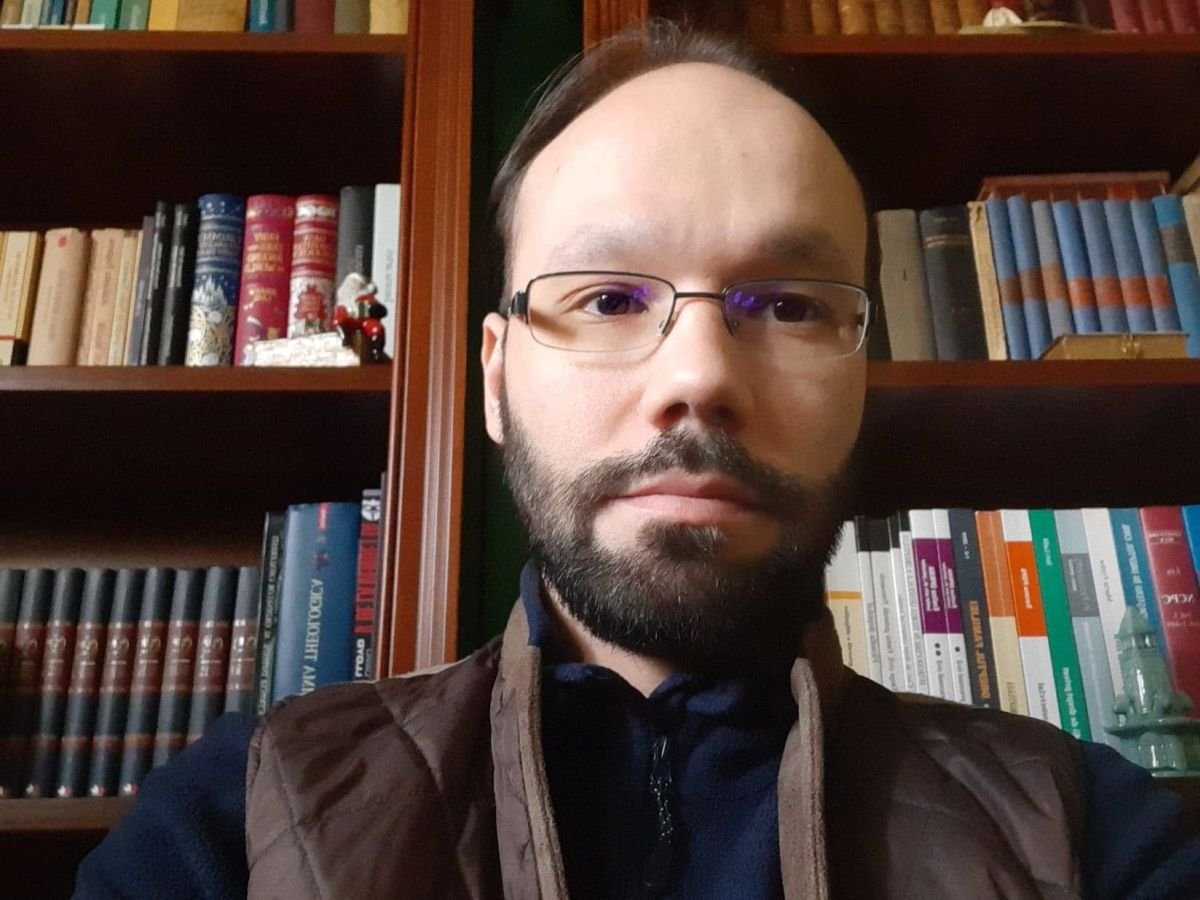
Attorney Bogdan Ionescu claims to Krónika: he is merely demanding compliance with the law
Fotó: Facebook/Bogdan Ionescu
Responding to this, István Szakács-Paál maintained to our publication:
The Arad County Court has also ordered the local council of Vladimirescu (Öthalom) commune to alter the name of Nicolae Paulescu Street in Mândruloc (Mondorlak), a village under its administrative jurisdiction – likewise following legal action initiated by the association led by Bogdan Ionescu. Paulescu, a physiologist and physician who patented the preparation of pancrein in Romania in 1922, embraced fascist and antisemitic doctrines in his political career.
The lawsuit was entered on the court docket in March, the first hearing occurred in May, and the bench delivered its ruling after four rounds of hearings; an appeal may be filed within 15 days. Mihai Mag, the Mayor of Vladimirescu, informed the Agerpres national news agency on Monday that the municipality will appeal, seeking to avoid setting a legal precedent.
We will defend Nicolae Paulescu Street – which currently hosts only a few commercial premises – because we do not wish to set a precedent. If we alter the name now, there is an imminent risk that Octavian Goga Street will follow, which encompasses approximately one hundred street numbers, families, and commercial enterprises, all of whom would be compelled to modify their official documentation,” the mayor stated.
According to Mihai Mag, it is fundamentally flawed to assess events from a century ago through the lens of modern standards. As he stated, in the case of the street bearing Octavian Goga’s name, the municipality defends the author’s name and literary legacy rather than the political convictions he espoused in his era. The mayor noted that the current street nomenclature of the commune was adopted in 2021 upon the completion of the municipality’s property cadastre; prior to that, properties in Mândruloc were identified strictly by postal house numbers.
In Bogdan Ionescu’s view, applicable laws govern numerous manifestations of public memory, encompassing street, square, and institutional designations, as well as statues and commemorative plaques.
Bogdan Ionescu told Agerpres.
The head of the association argued that the enforcement of the law cannot hinge upon the personal discretion of a mayor or any other public official. He underlined that in the case of Nicolae Paulescu, one cannot disregard that he falls squarely within the statutory definition: an individual who held a leadership role in a fascist, legionary, racist, or xenophobic organization. According to Ionescu, Paulescu served as vice-president of the interwar far-right organization National-Christian Defense League; consequently, naming a public space after him breaches existing legislation.
The association has initiated comparable proceedings across other Romanian localities, including a petition submitted to the Arad City Council urging the renaming of Octavian Goga Street. The local council rejected the petition, sending that dispute to the Arad County Court as well, where no judgment has yet been rendered.
According to Csaba Tóth, Sub-prefect of Arad County, the NGO also challenged an inscription on the monument commemorating victims of communism located along the Mureș River promenade, attributing the passage to a far-right author and requesting its modification. The municipal administration rejected the demand, meaning further litigation is expected on that front as well.
Csaba Tóth told Krónika.
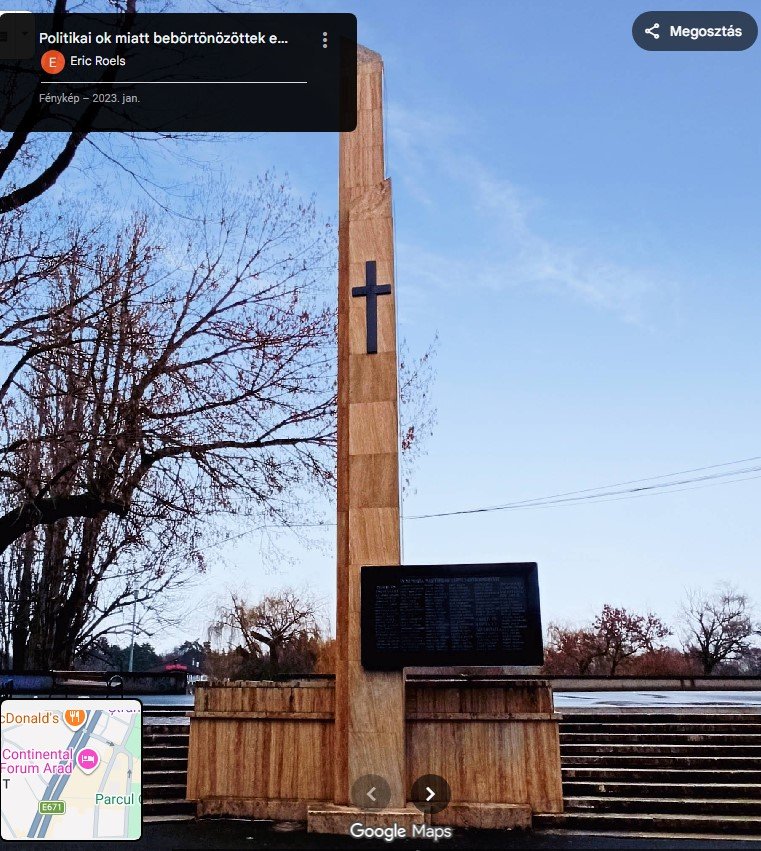
The monument to the victims of communism in Arad, whose inscription the attorney also considers contrary to law
Fotó: Wikipedia/Eric Roels
The regional representation of the Romanian Government is well acquainted with the attorney– who in his private life also serves as an international chess arbiter – as he has previously addressed dozens of administrative petitions to the Prefect’s Office concerning a range of issues.
A Kolozs Megyei Tanács nem kíván döntést hozni, miután egy egyesület hivatalosan kérte az Octavian Goga Megyei Könyvtár átnevezését azzal az indokkal, hogy a volt politikus és költő antiszemita volt.
Iratkozzon fel hírlevelünkre, hogy elsőként értesüljön a hírekről!
The Romanian language and literature Baccalaureate exam papers did not cause any particular headache for the graduating seniors in Cluj-Napoca who spoke to Krónika.

A woman in Cluj-Napoca (Kolozsvár) was confronted and told not to speak Hungarian; moreover, she was even called a „bozgor” (a derogatory term meaning „homeless” or „without a homeland”).

„The economic situation in Romania is currently so severe that the country is already standing at the doorstep of recession.” „Romania could already be in recession.” „Only a miracle could save us from recession.”
As of August 1, shoppers will have to dig deeper into their pockets – partly due to a 2–12% increase in the value-added tax (VAT), and partly due to the rise in excise duties.

“I would like to speak with Romania’s new president as soon and as extensively as possible, because we have shared issues within the European Union, and the interests of Romanians and Hungarians often align," Prime Minister Viktor Orbán told Krónika.
Although Romania is in urgent need of major adjustments given its struggling financial situation, the four-party coalition was only just formed following the presidential election in May.

Desperate, silent people, hopelessness, and the authorities’ secrecy characterize the situation in Parajd (Praid) following the salt mine tragedy.
Romania has lost the most residents over the past 20 years among the EU member states according to the „Demography of Europe – 2025 edition” research by the Eurostat statistical office.

I would like to share a personal story from 1986 that I have never told before. I had just finished my first year studying physics at university.
While Sunday’s first-round results of Romania’s presidential election were not entirely unexpected, the outcome delivered a political shock of historic proportions.





 Látogatottsági adatok
szóljon hozzá!